

Key Highlights
- High-change SAP environments make traditional retraining models costly, slow, and ineffective
- Frequent SAP updates create a growing gap between system change and user readiness
- Retraining cycles lead to training fatigue, productivity loss, and delayed user competence
- SAP adoption today requires continuous, in-the-flow support—not periodic training events
- Embedded, real-time guidance enables users to adapt to SAP changes while working
Introduction
Modern SAP environments are no longer static systems that change once every few years. Enterprises today operate in fast-moving landscapes driven by cloud adoption, regulatory updates, business transformation initiatives, and continuous process optimization. As a result, SAP systems are updated frequently – sometimes monthly or even weekly-creating constant change for end users.
Traditionally, organizations have relied on structured retraining programs to manage SAP updates. However, this approach is becoming increasingly unsustainable. Repeated classroom sessions, virtual training programs, and updated documentation consume time, budget, and employee attention, yet often fail to keep pace with real-world system changes.
This challenge has led forward-thinking enterprises to rethink how SAP user adoption is achieved. Instead of relying on periodic retraining, they are shifting toward models that support continuous SAP adoption-where users are enabled directly within the system as changes occur. This blog explores why retraining no longer scales, how adoption can be maintained in high-change environments, and how Assima Train enables SAP adoption without retraining through real-time, in-context support.
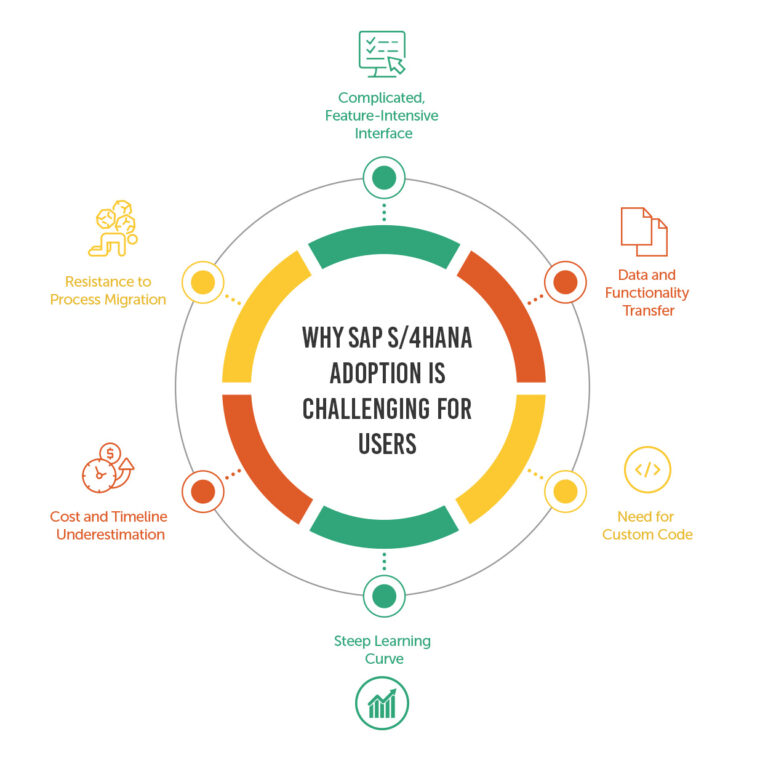
1. Why High-Change SAP Environments Create Adoption Challenges
SAP systems evolve continuously to support business agility. Organizations regularly implement SAP upgrades, apply security patches, introduce new workflows, and respond to regulatory changes. While these updates improve system capability, they also introduce complexity for users who must adapt quickly.
For end users, frequent change often leads to confusion and frustration. Processes they mastered yesterday may look different today. Navigation paths shift, fields are added or removed, and compliance steps change without warning. Over time, this erodes confidence and slows productivity, particularly for users who rely on SAP for mission-critical tasks.
The core challenge lies in the gap between system updates and user readiness. Even when training teams update learning materials, there is often a delay before users receive support. By the time retraining is delivered, the system may have already changed again. This disconnect is a key driver of poor SAP user adoption in high-change environments, where users struggle to keep up despite best efforts from L&D and IT teams.
Without a scalable way to support users continuously, organizations risk increased errors, higher support tickets, and reduced ROI from SAP investments.
2. The Problem with Retraining Cycles in SAP
Retraining cycles were designed for stable systems, not for environments that change constantly. Each retraining initiative requires planning, content creation, scheduling, and delivery—making it costly and time-consuming. For large enterprises, retraining thousands of users multiple times a year is rarely feasible.
Beyond cost, retraining introduces inefficiencies. Employees must step away from their work to attend sessions that may only partially apply to their roles. This contributes to training fatigue, where users disengage because training feels repetitive, disruptive, or disconnected from real tasks.
Another major issue is timing. There is often a significant delay between a system to change and when users become competent with it. During this period, productivity drops and errors increase. Traditional SAP training without retraining cycles is not achievable through classroom or LMS-based approaches alone.
As SAP environments continue to evolve faster, enterprises must acknowledge that retraining cannot be the primary mechanism for sustaining adoption.
3. Redefining SAP Adoption: Beyond Retraining
To succeed in high-change environments, organizations must redefine what SAP adoption means. Adoption is no longer about completing training programs-it is about enabling users to perform confidently and correctly now of need.
This shift moves learning out of classrooms and into the flow of work. Embedded learning models provide guidance directly within SAP, allowing users to learn while doing. Instead of memorizing processes, users receive contextual support tailored to their role and task.
Real-time assistance reduces reliance on documentation and helpdesks while accelerating task completion. This approach supports SAP user enablement by ensuring that learning is continuous, contextual, and aligned with real system behavior.
The benefits of continuous enablement models include faster adaptation to change, reduced operational risk, and sustained productivity without the disruption of repeated retraining initiatives.
4. How Assima Train Supports Adoption Without Retraining
Assima Train is designed specifically for high-change enterprise environments where traditional training models fall short. It enables organizations to maintain adoption by providing real-time, in-context SAP guidance that evolves alongside the system.
Unlike static documentation or outdated recordings, Assima Train delivers interactive simulations that mirror live SAP systems with high fidelity. Users are guided step by step through actual workflows, ensuring accuracy even as processes change. This approach supports SAP adoption without retraining by removing the need for repeated formal training sessions.
One of Assima Train’s key strengths is rapid content update capability. When SAP configurations change, guidance can be updated quickly-often without re-recording or redesigning entire training programs. This ensures alignment with an ongoing SAP system to update training requirements.
Assima Train also supports scalable, global deployment. Multilingual capabilities allow organizations to provide consistent guidance across regions, supporting distributed teams without duplicating effort. Embedded SAP in-app guidance ensures users receive help precisely when and where they need it.
By combining real-time support, high-fidelity simulations, and scalable delivery, Assima Train enables enterprises to sustain adoption even in the most dynamic SAP environments.
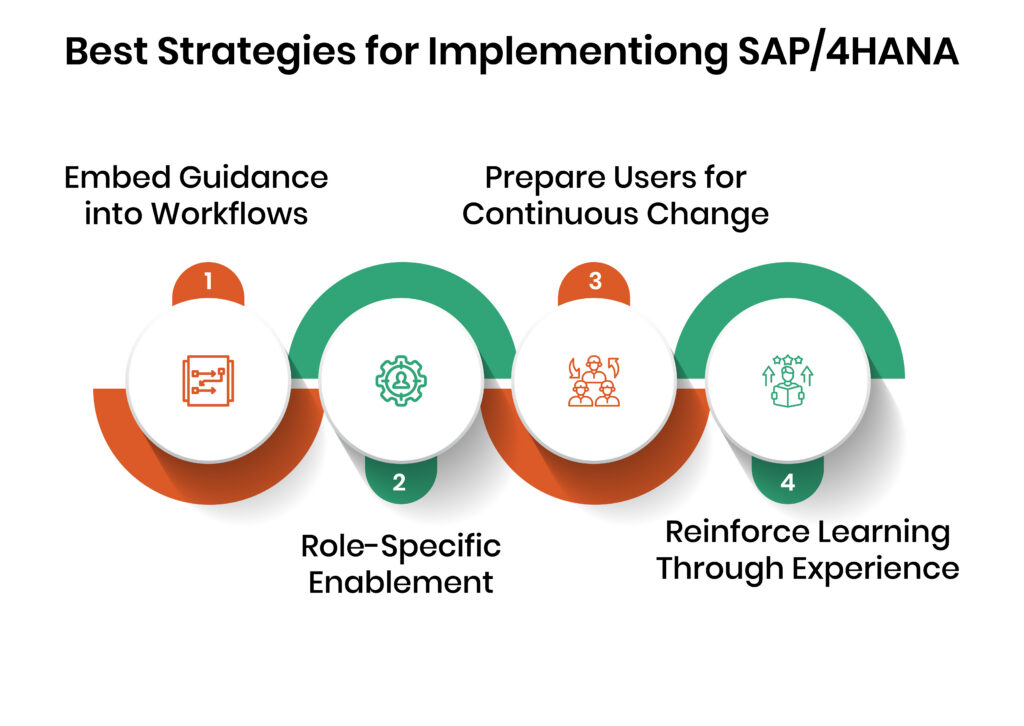
5. Practical Strategies for High-Change SAP Environments
Maintaining adoption in high-change environments requires a shift in strategy. One of the most effective approaches is embedding guidance directly into daily workflows. When support is available at the point of execution, users can adapt instantly without leaving the system.
Role-specific enablement is equally critical. Generic training often overwhelms users with irrelevant information. Aligning guidance to role-based tasks ensures relevance and improves engagement, particularly for complex or compliance-driven processes.
Organizations should also prepare users for continuous system evolution. Setting expectations that SAP will change, and that support will always be available builds confidence and resilience. This approach complements SAP change management training by reinforcing learning through experience rather than events.
Together, these strategies help reduce dependency on retraining while enabling users to perform effectively despite frequent updates.
6. Measuring Long-Term SAP Adoption Success
Measuring SAP adoption requires looking beyond training in completion of metrics. True adoption is reflected in how confidently and accurately users perform tasks within the system.
Key indicators include reduced error rates, faster task completion, and lower support ticket volumes. Monitoring usage patterns helps identify where users struggle and where additional guidance may be needed, supporting SAP user performance support initiatives.
Feedback loops are essential for continuous improvement. User insights can be used to refine guidance, address gaps, and adapt support as the system evolves. This data-driven approach ensures adoption remains strong over time, even as SAP continues to change.
Conclusion
High-change SAP environments demand a new approach to user adoption. Retraining cycles are no longer scalable, cost-effective, or aligned with how modern enterprises operate. Instead, organizations must focus on enabling users continuously within the system and now of need.
By shifting away from retraining and toward embedded, real-time support, enterprises can reduce disruption, lower costs, and sustain productivity. Assima Train provides the foundation for this model, enabling organizations to achieve lasting adoption without retraining and supporting continuous SAP adoption at scale.
For enterprises navigating frequent SAP updates, Assima Train is not just a training tool-it is a strategic enabler of long-term SAP success.
Ready to maintain SAP adoption without retraining cycles? See how Assima Train delivers real-time.
Frequently Asked Questions
Let’s Answer Some of Your Questions.
SAP environments change frequently due to upgrades, regulatory requirements, and process improvements, making traditional training quickly outdated.
Yes. With real-time, in-context support and embedded guidance, users can adapt to changes without repeated formal training sessions.
Assima Train provides interactive, high-fidelity SAP simulations and real-time guidance that can be updated quickly as systems change.
Benefits of eliminating retraining cycles are Organizations reduce costs, minimize disruption, improve productivity, and support SAP training for frequent updates more effectively.
Enterprises measure SAP adoption success by tracking task performance, error rates, system usage, and user confidence rather than relying solely on training completion of metrics.